Bridging Worlds at Ewuaso River Lodge
Ever wondered what it feels like to step into the heart of Maasai land, surrounded by sweeping savannahs, ancient traditions, and the gentle murmur of a wild river?
Well, let me take you on a journey to Ewuaso River Lodge—a hidden gem where Maasai culture isn’t just observed, it’s lived, breathed, and celebrated every single day. Here, amid the breathtaking wildlife encounters and stunning landscapes, we offer something equally precious: authentic connections with the Maasai people who have called this land home for centuries.
Unlike the rushed cultural shows that have become commonplace in tourism, our experiences emerge from deep relationships built over years with our neighboring Maasai communities. We’ve created opportunities for genuine exchange – moments where visitors and Maasai alike can share, learn, and connect on a human level that transcends the typical tourist experience.
The red-cloaked figures moving across the savannah are not props in your safari photos but our neighbors, partners, and friends. Their ancient wisdom about this ecosystem has helped shape our conservation approach, while their vibrant traditions add immeasurable richness to the Ewuaso River Lodge experience. Join us as we unveil the multi-layered world of Maasai culture – respectfully, authentically, and meaningfully.
The Maasai People: Guardians of Kenya’s Savannah
Ancient Heritage in a Modern World
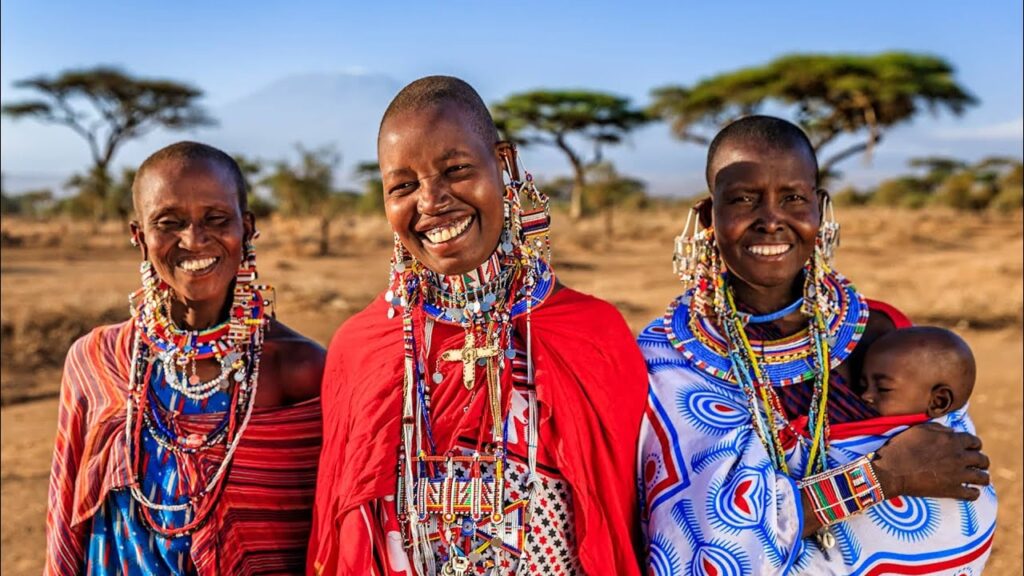
The Maasai people represent one of Africa’s most recognized indigenous cultures, with a lineage stretching back centuries. Semi-nomadic pastoralists who traditionally followed seasonal grazing patterns across Kenya and Tanzania, they have maintained core cultural practices despite the pressures of modernization.
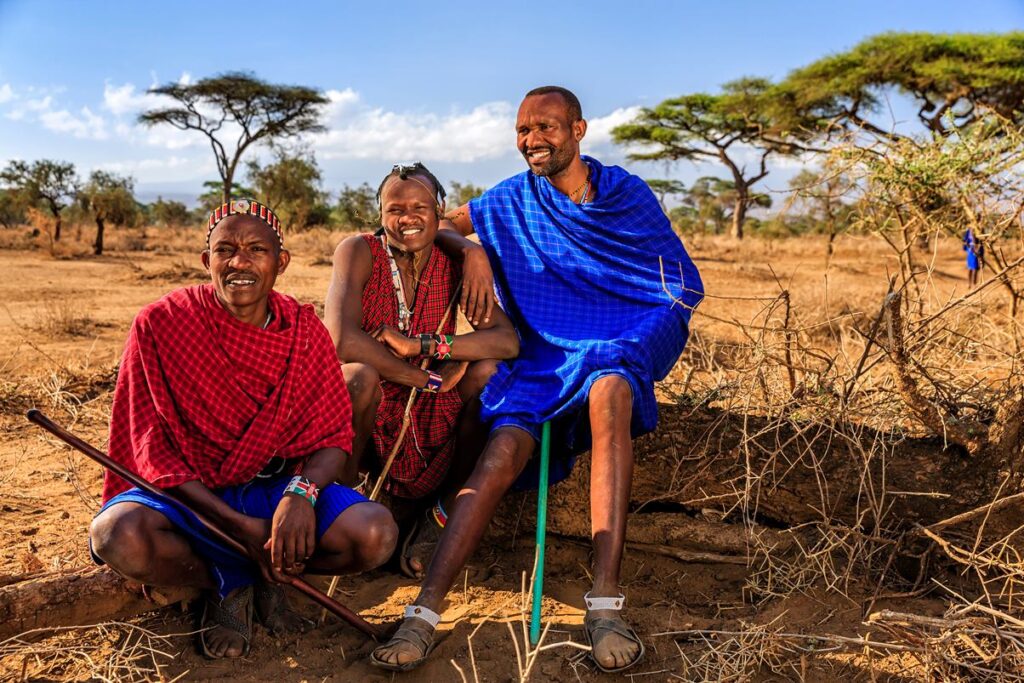
What strikes many visitors first is how the Maasai have preserved their identity while selectively adopting elements of contemporary life. You might see a young warrior in traditional shuka (colorful cloth) checking his smartphone, or elders using solar panels to charge lights while still living in traditional homes. This is not contradiction but adaptation – the hallmark of cultural resilience.
The Maasai at Ewuaso have chosen to share aspects of their heritage while determining their own relationship with the modern world. Some community members pursue education and careers in nearby towns before returning to contribute their skills. Others maintain entirely traditional lifestyles. Both paths are respected, representing different responses to the complex question of cultural preservation in the 21st century.
The Significance of Land and Cattle
To understand Maasai culture, one must grasp the profound relationship between the people, their cattle, and the land. Cattle represent more than livelihood – they’re a spiritual connection, a measure of wealth, a source of sustenance, and a central element in ceremonies and social relations.
“To the Maasai, land and cattle are life itself,” explains Ole Lenku, a local elder who often speaks with our guests. “Our traditions teach us that Enkai (God) entrusted all cattle to the Maasai. Our role as guardians of both the land and these animals shapes everything from our daily routines to our deepest beliefs.”
This relationship has created a remarkable body of ecological knowledge. Maasai herders can read subtle changes in vegetation that signal shifting weather patterns. They understand how to manage grazing to prevent overuse. Their traditional land management practices often align with modern conservation principles – though arriving there through different paths of knowledge.
Our Philosophy: Cultural Respect and Authentic Exchange
Beyond Tourist Shows: Creating Meaningful Connections
You won’t find performances staged purely for visitors at Ewuaso River Lodge. Instead, we’ve developed a different approach to cultural tourism – one centered on respect, authenticity, and mutual benefit.
“Many lodges bring in dancers to perform quickly before dinner, with no context or real interaction,” notes Sarah Naikada, our cultural liaison who herself comes from a local Maasai family. “We wanted something more meaningful – experiences that honor the depth of Maasai culture while creating genuine human connections.”
Our cultural encounters vary from extended village stays to shared meals, crafting workshops, knowledge exchanges about wildlife, and participation in daily activities. Sometimes the most profound moments happen spontaneously – a shared laugh while learning to throw a rungu (traditional wooden club), or a quiet conversation about family life while walking the savannah.
Community Partnerships Built on Trust
The authentic experiences we offer exist because of partnerships built over years, not days. When Ewuaso River Lodge was first established, we approached community engagement differently than many tourism operations. Rather than imposing our vision, we asked: “How would you like to share your culture, if at all? What boundaries must we respect? How can tourism truly benefit your community?”
The answers shaped our approach. Some ceremonies remain private. Certain sacred knowledge is not shared. Photography follows specific protocols. And crucially, economic benefits flow directly to community members through fair compensation, education funds, healthcare support, and micro-enterprise development.
“We are not exhibits in a museum,” Elder Mpeti often tells visitors during welcome orientations. “We are people sharing our living culture because we choose to – and because we believe cultural exchange benefits everyone when done with respect.”
Traditional Maasai Village Visits: Step Into Daily Life
Home Life and Family Structure
Stepping into a traditional Maasai homestead (enkang) offers insights into family structures that have supported this community for generations. Typically encircled by thorny acacia branches for protection, each enkang contains multiple houses arranged in a circle, reflecting the extended family unit at the heart of Maasai social organization.
During village visits, you’ll learn how age sets and gender roles create a complex social framework. Men progress through age-based warrior stages, while women maintain crucial responsibilities in home life, child-rearing, and many economic activities. Elders of both genders hold respected positions as knowledge keepers and decision-makers.
Visitors often express surprise at the strong sense of collective responsibility. Children belong not just to their parents but to the wider community. Resources are shared to ensure no one goes without. The concept of community welfare over individual accumulation creates resilience that has helped the Maasai weather challenges throughout their history.
Sustainable Traditional Architecture
The traditional Maasai house (inkajijik) offers a powerful lesson in sustainable building. Constructed by women using locally available materials – timber frames, cow dung, mud, ash, and grass – these homes stay remarkably cool during hot days and warm during chilly nights.
“Our houses return to the earth,” explains Naserian, a homestead matriarch who sometimes welcomes visitors to see her home. “They use no manufactured materials, create no waste, and perfectly suit our needs. This is sustainability from necessity, not from modern trends.”
Inside, the compact space is ingeniously organized with separate areas for cooking, sleeping, and keeping young livestock during dangerous nights. Small openings provide minimal light and ventilation while keeping the interior cool. The central fireplace serves for cooking, light, social gathering, and smoke treatment of the ceiling to repel insects.
The Vibrant Art of Maasai Beadwork
Learning from Maasai Artisans
Among the most distinctive elements of Maasai culture is their elaborately beaded jewelry and accessories. These aren’t merely decorative but communicate detailed information about the wearer’s age, social status, and even specific life events.
At Ewuaso River Lodge, we offer intimate beadwork workshops where guests learn alongside Maasai women who have perfected this craft. You’ll try your hand at the intricate patterns while hearing the stories behind different designs. It’s a chance for genuine connection through shared activity – often resulting in laughter as visitors discover just how challenging this skilled handwork can be.
“When I teach visitors beading, we talk as we work – about our children, our daily lives, our hopes,” says Tereto, one of our regular artisan instructors. “They learn not just beading but about my life, and I learn about theirs. This is the true exchange.”
Symbolism and Stories in Every Design
Each color and pattern in Maasai beadwork carries meaning. Red symbolizes bravery and unity. Blue represents energy and the sky that brings rain. Green connects to the land and plants that sustain both people and cattle. White signifies peace, health, and milk – central to Maasai nutrition.
Beyond colors, the specific designs communicate social information. Certain patterns indicate marital status, while others identify specific age sets or clans. Some pieces are created specifically for ceremonies or life transitions. The large flat disc necklaces worn by married women, for instance, represent their status and family connections.
Through our beadwork experiences, you’ll gain the ability to “read” these symbolic elements – adding depth to your appreciation of Maasai artistic expression. You’ll also support a vital economic activity for Maasai women, who have traditionally used beadwork sales to gain financial independence within their communities.
Warrior Traditions and Coming of Age
The Famous Jumping Dance (Adumu)
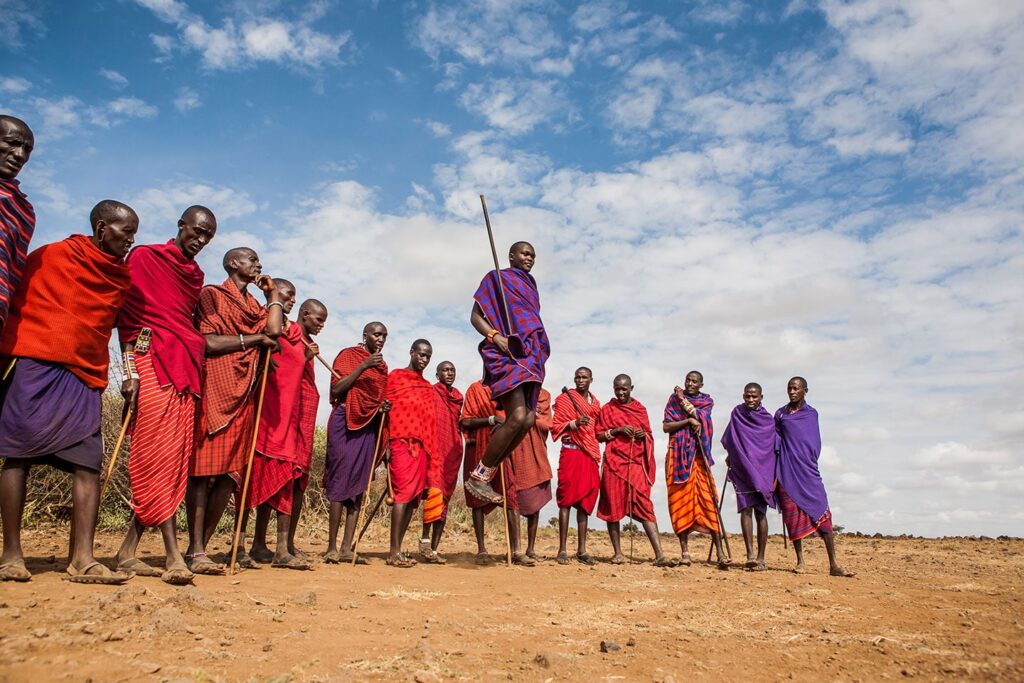
Perhaps the most internationally recognized element of Maasai culture is the warrior jumping dance, or adumu. Yet many visitors don’t understand its true significance beyond the spectacular sight of young men leaping impressively high from a standing position.
The adumu is part of the eunoto ceremony marking the transition from junior to senior warrior status – a crucial coming-of-age ritual. The jumps demonstrate strength and endurance, with higher jumps traditionally improving marriage prospects by showcasing athletic prowess.
At Ewuaso River Lodge, you may be invited to witness authentic adumu performed not as isolated entertainment but as part of broader cultural sharing. Warriors explain the purpose behind each element, from the rhythmic throat singing that accompanies the jumps to the specific formation of the circle.
“When we invite guests to try jumping with us, it’s often the most memorable part of their stay,” laughs Lemarti, a young warrior who often participates in cultural exchanges. “But through the laughter comes understanding of what these traditions mean to us.”
Ancient Skills for Modern Times
Beyond the visually striking ceremonies, Maasai warrior training encompasses practical skills that remain relevant today. Tracking animals, identifying medicinal plants, predicting weather changes, finding water in arid landscapes – these traditional knowledge systems represent sophisticated adaptations to the savannah environment.
Our specialized bush walks pair visitors with Maasai warriors who demonstrate these skills firsthand. You might learn how to identify animal tracks, which plants can purify water, or how subtle changes in bird behavior signal approaching weather changes. The experience highlights how indigenous knowledge complements scientific understanding of ecology.
This knowledge exchange benefits conservation as well. Many of our guides combine formal wildlife management training with traditional Maasai tracking skills, creating a powerful synthesis that enhances wildlife monitoring and research activities around the lodge.
Maasai Cuisine: Taste Traditional Flavors
Interactive Cooking Experiences
Food often provides the most direct connection to another culture, and Maasai cuisine offers distinctive flavors that tell the story of a pastoral people adapted to savannah life. Through our interactive cooking experiences, visitors join Maasai community members to prepare and share traditional foods.
Central to Maasai nutrition are cattle products – milk (both fresh and fermented), meat, and occasionally blood (historically taken sustainably from living cattle during harsh dry seasons). These protein sources are complemented by simple porridges and, in contemporary diets, vegetables from small gardens.
“Visitors are often surprised by our traditional preservation methods,” explains Ntimama, who leads many of our cooking experiences. “We smoke meat to create a jerky-like preserve called olpurda. We ferment milk in gourds to create naturally probiotic drinks. These methods allowed mobility and food security long before refrigeration.”
The cooking experience culminates in a shared meal where conversation flows naturally as food is passed around. It’s during these informal moments that many visitors report having their most meaningful cultural exchanges – proving that breaking bread together remains humanity’s most universal connection.
Medicinal Knowledge and Natural Healing
Walking with Tribal Healers
Long before modern pharmaceuticals, the Maasai developed sophisticated botanical knowledge to treat everything from wounds to digestive issues to fever. This knowledge remains relevant today, with many plant compounds used in traditional healing now validated by scientific research.
Our medicinal plant walks are led by community elders who serve as traditional healers. They identify numerous species and explain their applications – the acacia bark used to treat stomach ailments, the sokonoi shrub whose branches make natural toothbrushes with antimicrobial properties, or the osilalei tree whose resin treats chest infections.
“Modern medicine has important place,” notes Lekishon, an elder healer who sometimes shares his knowledge with guests. “But plants that grew here for generations still have much to teach us. The land provides what we need if we listen and learn.”
These walks do more than share botanical information – they demonstrate a holistic approach to health that considers physical, spiritual, and community wellness as interconnected elements. It’s a perspective increasingly valued in contemporary discussions about integrative medicine and sustainable healthcare.
Nighttime Storytelling Around the Fire
Oral Traditions and Mythology
As darkness falls over the savannah and stars emerge with breathtaking clarity, we sometimes gather around a traditional fire for one of the oldest human activities – storytelling. In Maasai culture, oral tradition has been the primary method for preserving history, conveying moral lessons, and transmitting cultural knowledge between generations.
Elder storytellers share traditional tales featuring animal characters with human traits, origin stories explaining natural phenomena, and historical accounts of tribal migrations and significant events. Without written records, Maasai elders developed remarkable memory techniques, allowing them to recite genealogies going back many generations and recall detailed accounts of historical events.
“In our stories, you hear our values,” explains Mpondo, an elder known for his captivating storytelling. “Courage, respect for elders, community responsibility, cattle stewardship – these teachings shaped our people through entertaining tales rather than direct instruction.”
These fireside sessions often become interactive, with visitors invited to share stories from their own cultures. The universal themes that emerge – love, courage, trickery, wisdom – highlight our shared humanity across vastly different cultural contexts.
Language and Communication: Learn Basic Maa
Cultural Exchange Through Words
Language carries culture, and learning even a few words in Maa (the Maasai language) creates immediate connections. Our cultural immersion includes casual language lessons where visitors learn greetings, common phrases, and words related to the savannah environment.
“When guests greet me with ‘Sopa’ instead of hello, their effort shows respect,” smiles Noonkuta, who helps coordinate many cultural activities. “Even small efforts to learn language build bridges between us.”
Beyond practical communication, these informal language sessions reveal fascinating aspects of Maasai worldview through linguistic structure. The complex cattle terminology reflects their cultural importance – dozens of specific words describe cattle by age, color pattern, and horn shape. Similarly, the language contains nuanced terms for landscape features crucial for pastoralism, like specific types of grazing land or water sources.
Visitors often participate in simple conversation exchanges, teaching phrases from their own languages while learning Maa. This reciprocal learning creates balanced cultural exchange rather than one-sided observation.
Conservation Through Indigenous Knowledge
Maasai Wildlife Tracking Techniques
Modern conservation science increasingly recognizes the value of indigenous knowledge systems developed over centuries of close observation. At Ewuaso River Lodge, this principle guides our unique tracking experiences that combine Maasai traditional skills with contemporary wildlife monitoring.
Our specialized tracking walks pair professional wildlife guides with Maasai trackers who demonstrate how to read the subtle signs animals leave behind. Beyond obvious footprints, skilled trackers identify feeding signs, territorial markings, displacement patterns in vegetation, and even estimate how recently an animal passed through an area.
“Western science measures and categorizes. Our knowledge watches and understands relationships,” explains Saruni, who leads many tracking experiences. “Both approaches together create fuller picture of animal behavior and needs.”
These experiences not only fascinate visitors but contribute to our conservation efforts. Local Maasai trackers help monitor elusive species like leopards, identify wildlife corridors that need protection, and detect early signs of ecosystem changes that might affect animal populations.
Traditional Land Management Wisdom
For centuries, Maasai pastoral practices created a sustainable relationship with the savannah ecosystem. Their rotational grazing patterns allowed vegetation recovery periods. Strategic controlled burning promoted fresh growth and prevented catastrophic wildfires. Water sources were managed as communal resources with usage protocols that prevented depletion.
During our landscape interpretation walks, Maasai elders explain these traditional management approaches and how they’ve evolved to address contemporary challenges like climate change and reduced migration ranges. They demonstrate how subtle vegetation changes indicate soil health and how certain “indicator plants” signal environmental shifts.
This traditional ecological knowledge increasingly informs conservation strategies both at Ewuaso River Lodge and beyond. Our collaborative land management combines scientific monitoring with generations of Maasai observational data, creating resilient approaches to habitat protection in a changing climate.
Supporting Education in Maasai Communities
School Visits and Cultural Exchange Programs
Education represents both challenge and opportunity for Maasai communities navigating cultural preservation alongside contemporary participation. Through our community partnerships, we’ve developed meaningful exchanges between visitors and local schools that support educational development while respecting cultural values.
School visits at Ewuaso aren’t simply observational but interactive. Visitors might share skills from their own backgrounds – from art projects to science demonstrations – while students teach traditional games or perform cultural presentations they’ve prepared. These exchanges foster mutual respect rather than one-way observation.
“When children see visitors valuing our traditions while also bringing new knowledge, they understand they don’t have to choose between being Maasai and being global citizens,” notes Koikai, a teacher at the community school. “They can walk in both worlds with pride.”
A portion of every stay at Ewuaso River Lodge supports education initiatives chosen by community members themselves – from school infrastructure improvements to scholarship programs for promising students. These investments represent our commitment to sustainable impact beyond the tourism experience itself.
Responsible Cultural Tourism: Our Commitment
Economic Benefits for Local Communities
Cultural tourism can either exploit or empower indigenous communities, depending entirely on how it’s structured. At Ewuaso River Lodge, we’ve implemented a comprehensive approach to ensure that Maasai communities receive direct, meaningful economic benefits from tourism activities.
Every cultural experience includes fair compensation for the knowledge holders who share their time and traditions. Additionally, a percentage of all lodge revenue flows into community development funds managed by local leadership councils. These funds support healthcare initiatives, educational scholarships, water projects, and microenterprise development.
“Visitors sometimes worry about negative impacts of tourism on indigenous cultures,” acknowledges James, our lodge manager. “But when communities control how their culture is shared and receive fair benefits, tourism can actually strengthen cultural pride and provide economic alternatives that reduce pressure to abandon traditional practices.”
We maintain transparency about how visitor fees translate to community impact, publishing annual reports and offering behind-the-scenes looks at supported initiatives during longer stays. This accountability ensures that promises of community benefit become measurable reality.
Seasonal Celebrations and Ceremonies
Witnessing Authentic Rituals (When Appropriate)
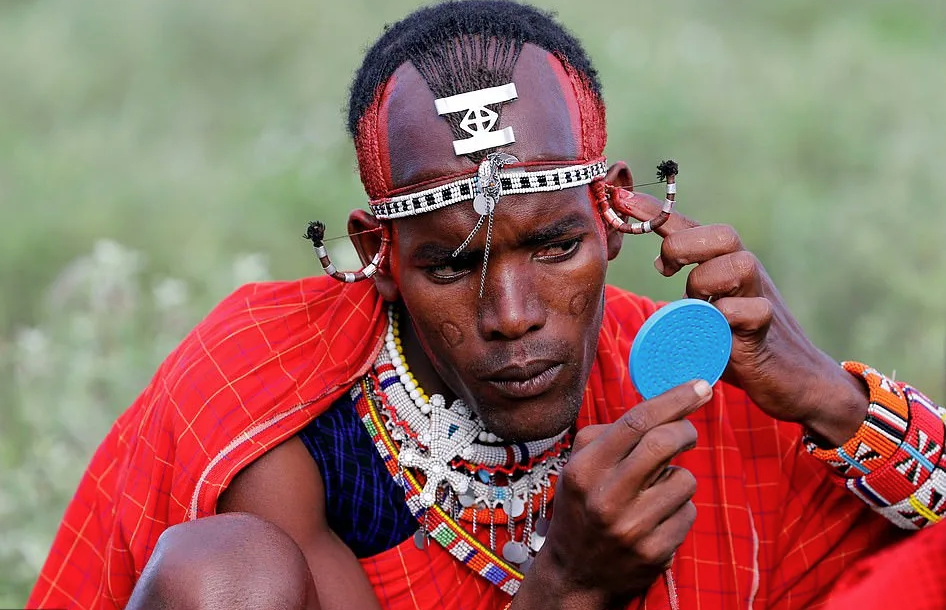
The Maasai calendar includes significant ceremonies marking seasonal transitions and important life stages. While many sacred rituals remain private, communities sometimes welcome respectful visitors to witness certain celebrations that offer profound insights into Maasai spiritual and social structures.
Guests staying during these periods may be invited to observe age-set graduation ceremonies, blessing rituals at the beginning of rainy seasons, or marriage celebrations. These invitations always come from the community rather than being arranged as tourist attractions, and participation follows protocols established by elders.
“Some ceremonies we keep private – this preserves their sacred meaning,” explains elder Lekishon. “Others we selectively share because cultural exchange has always been part of our history. The key is that we decide which is which.”
For ceremonies where photography is permitted, our cultural guides provide clear guidelines about respectful documentation. Visitors learn to ask permission, avoid disrupting proceedings, and understand the context of what they’re witnessing rather than simply collecting exotic images.
Conclusion: Cultural Immersion That Transforms
At Ewuaso River Lodge, we believe that cultural encounters at their best can transform both visitor and host. Through respectful, authentic exchanges with our Maasai neighbors, we’ve witnessed countless moments of genuine connection that transcend typical tourism experiences.
Visitors often arrive with preconceptions about Maasai culture shaped by documentaries or glossy travel magazines. They depart with nuanced understanding of a living, evolving tradition facing modern challenges with remarkable resilience. They recognize the sophisticated ecological knowledge embedded in seemingly simple practices. They appreciate the humor, innovation, and individuality of people too often portrayed as exotic stereotypes.
Meanwhile, our Maasai partners gain economic opportunities that support cultural continuity on their own terms. They select which traditions to share and how. They challenge misconceptions through direct conversation. They demonstrate that indigenous knowledge deserves equal respect alongside other knowledge systems.
This mutual respect forms the foundation of every cultural experience at Ewuaso River Lodge. We invite you to join us – not as a spectator but as a participant in meaningful cultural exchange that honors both ancient wisdom and contemporary reality. In doing so, you’ll discover that the most valuable souvenirs aren’t material but transformative: new perspectives, genuine connections, and memories of shared humanity across cultural differences.
Ready to Experience Maasai Culture Like Never Before?
Ewuaso River Lodge isn’t just a place to stay—it’s a place to belong, even if just for a while. Whether you’re a culture buff, a wildlife enthusiast, or simply someone craving a break from the ordinary, this riverside retreat promises memories that linger long after you’ve left.
So, what are you waiting for? Pack your sense of adventure, bring an open heart, and come discover the Maasai spirit at Ewuaso River Lodge. Trust me, you’ll leave with more than just photos—you’ll leave with a piece of Africa in your soul.
FAQs About Maasai Cultural Experiences at Ewuaso River Lodge
1. Are the cultural experiences at Ewuaso River Lodge authentic or staged for tourists?
Our cultural experiences emerge from genuine community partnerships rather than performances staged for tourists. While some activities are organized at convenient times for visitors, they represent authentic aspects of Maasai culture shared by community members who choose to participate. We prioritize meaningful exchange over stereotypical presentations, which means experiences vary based on community events, seasonal activities, and the specific knowledge holders available during your stay.
2. How does Ewuaso River Lodge ensure that cultural tourism benefits the Maasai community?
We’ve implemented a multi-faceted approach to ensure fair community benefits. This includes direct compensation for all cultural knowledge holders who participate in experiences, a percentage of overall lodge revenue directed to community development funds governed by local leadership, educational scholarships for community members, preferential employment opportunities, and support for Maasai-owned micro-enterprises. We maintain transparent reporting about how tourism revenue translates to community impact.
3. What should visitors wear and how should they behave during cultural visits?
We provide comprehensive cultural orientation upon arrival, but general guidelines include modest dress (shoulders and knees covered), asking permission before taking photographs, removing sunglasses during conversations as eye contact is culturally important, and following the lead of cultural guides regarding appropriate questions and behaviors. Most importantly, approach experiences with respectful curiosity rather than judgment, recognizing that cultural differences represent different adaptations rather than hierarchical development stages.
4. Can children participate in the Maasai cultural experiences?
Absolutely! Maasai culture is very family-oriented, and many of our experiences are wonderful for children. Kids particularly enjoy learning traditional games from Maasai children, participating in beadwork or craft activities, and joining school visits where cultural exchange happens naturally through play and interaction. Our cultural guides are adept at adapting content for different ages, making experiences engaging and educational for young visitors.
5. How can visitors continue supporting Maasai communities after their stay?
Many guests develop genuine connections that extend beyond their visit. We facilitate sustainable ongoing engagement through our community foundation, which accepts targeted donations for specific initiatives identified by community members. Additionally, we can connect interested visitors with reputable organizations working on indigenous rights, cultural preservation, and sustainable development in Maasai regions. Finally, simply sharing accurate, respectful representations of contemporary Maasai life helps counter stereotypes and misconceptions that affect how indigenous cultures are perceived globally.